"Use what talents you possess; the woods would be very silent if no birds sang there except those that sang best." -Henry Van Dyke

Tuesday, December 8, 2015

Lab reflection

This semester we had the opportunity to get real teaching experience through our AEE 412 lab. Overall this was a very good experience for me. Through my time here in college, the majority of my classes have been focused on teaching content knowledge, not giving me the opportunity to actually practice teaching the material. 

The only part of the labs that i would consider changing would be the amount of time we spend in an actual classroom (maybe because I enjoyed it so much). It was a great experience though. 

Through the experiences in this lab I have grown both personally and professionally. I have realized what areas of my teaching I really need to work on in order to continue to grow. Mainly I need to continue developing my skills when it comes to effective questioning. I feel as though I have grown the most when it comes to my clarity of instruction. 
I also feel like now I will be able to look the lessons I teach and reflect on them more effectively. Being able to reflect and see where you need to improve is going to be a huge part of my student teaching experience. In order for me to  continue to grow as an educator, I will need to continue to reflect. 

**I apologize for the odd formatting, there seems to be a computer error


Wednesday, November 25, 2015

FFA LifeKnowledge Lesson

On Monday I went to West Perry High School to do a visit with my cooperating teachers and teach a LifeKnowledge lesson. The class I was teaching ended up being the 3rd period Large Animal Science class (a class that I will be teaching in the spring).

Overall, the lesson went well. I chose the lesson "The Need for Leaders". This lesson is designed to teach students 3 main topics: what is a leader, why do we need leaders, and how can they be leaders.

As I was teaching the lesson, I felt as though I was extremely rushed to get to the next section. This lesson was intended to last 50 minutes the way they wanted it taught, but I believe this lesson should take an hour if we want the students to actually get the content and understand what we are talking about. It seemed like every 5 minutes we were doing something different.

After the class, Mrs. Miller told me that she was impressed with how engaged the students were, she was not expecting them to be as engaged for a few different reasons. One main reason was that the students were all ready to leave for thanksgiving break. Some of the feedback that the students gave me made it obvious that this lesson needed more time. The majority of the students wrote on their papers that they wish the lesson had gone a little bit slower, or they had more time to share out their ideas and plan out what they were doing more. The rest of the feedback I received was more focused on my own performance. A lot of the positive feedback was that I did very well projecting my voice in the classroom I was in (it was a back room of the shop where sound did not travel well) and that the instructions I gave were very clear and they knew exactly what I expected them to do.

Overall the lesson went well. I received a lot of good feedback from the students and Mrs. Miller; and I got the opportunity to meet the students in one of my classes for the spring. The only issue that I really ran into was that the lesson was very rushed to get finished and still have time to get the feedback I needed.  

Tuesday, November 24, 2015

Micro-teaching

In this blog post I am going to discuss my micro-teaching experience each day.  I was teaching the water cycle to the Natural Resources and Ecology class at Tyrone High School

Day 1: 

Today was a little bit rough, the students at Tyrone did not understand the materials as well as Mrs. Hoy and I thought they did. The students were also testing my classroom management skills.


During the class, the students were working well and responding to the lesson, I did not get nearly as much covered as I wanted to (less than half of the lesson that was supposed to take 1 day). After the class was over, I spoke with Mrs. Hoy and we decided that the students did not understand the materials and terms at all. I decided to take a different approach for day 2. 

Day 2:

Today I decided to start with a quick PowerPoint to teach the students all of the terms they needed to know to understand the lesson. For each term I gave the definition and examples for each. For example, deposition is the process of water vapor turning directly into ice. You would normally see deposition when you are either high up in the mountains, or on a very cold night when your windshield is dry but you come out in the morning and it is covered in frost. The students really learned the definitions from this. 

Next I had the students take the slips of paper they had (with the picture and definitions) and cut it in half so that the picture was separated from the definition. Once they were cut up, they had to put all the pieces back into an envelope. I collected the envelopes and mixed them up so they got one from a different group. The students then had to work to pair up they pictures and definitions, and also place them in order they might come in the water cycle. 

Once they students finished this they were given a sheet with 3 boxes on it. In those 3 boxes were the words: Water Vapor, Water, Ice. The students were then told to draw a concept map using all of the terms they had learned. This was meant to reinforce the way water changes during each stage of the water cycle. 

Day 3: 

Today we finally got around to finishing the lesson. This class was a great learning experience for me. I got to see the reality of teaching and see how a 1 day lesson could turn into a 3 day lesson. once we finished the conclusion part of the CASE lesson, I handed the students out a learner satisfaction form for them to fill out. The feedback they gave had a huge range. Some students wish I had gone fast and others wanted me to slow down more. This just goes to show that no matter what you do as a teacher, it is not going to work for everyone. 

Saturday, November 14, 2015

Inquiry lab

This week we had to design a lesson around inquiry based instruction and present it for our lab section. This type of instruction is meant to have the students direct what they learn through questioning and the scientific method.

For this lab I had the students exploring the effects of pollution and methods of cleaning the pollution. To start the lesson, I had the students each "pollute" a clear cup of water with several different common items such as salt, pepper, hot chocolate mix, toothpicks, and vegetable oil. each student had the chance to pollute their water however they wanted to. This was to simulate what could happen when certain environmental laws and policies are not followed (previous lesson).

After their water was polluted, the students were directed to trade their water with someone else in the class. Once their received their water, the students were supposed to then make observations on their water, and come up with ideas of how they can clean the pollution. every student had their own unique method, some of which worked, others did not work so much.

Improvement:

After watching my lab, I realize where I need to improve on still. 

Although my clarity of the instructions I gave was much better than before, the clarity of the content I explained still needs work. I found myself struggling for the correct words when I gave explanations of certain concepts and ideas. 

I plan on improving on this during my micro-teaching experience next week. I have been reading up on all of my lesson plans and refreshing myself on the content that I will be teaching. 

How will I use this?

During my student teaching, I plan on using an improved version of this lesson with more materials for the students to use. This was probably my best lesson yet and with a little bit of improvement it would be a lesson worth sharing to other teachers. 

Saturday, November 7, 2015

Teach Ag Chat

For our Teach Ag chat, Stacia Gouger and myself were taking a slightly different idea. We decided to discuss the integration of place-based environmental education into school based agriculture education.


As you can see, the questions we asked were very focused on environmental education and different techniques for agriculture teachers to use in their classrooms.

Prior to the chat, we spent the majority of our time advertising for the chat and calling out specific people on twitter to try to get them involved.

Our biggest success for this chat ended up being our professional guests. We specific contacted several people; only three of which responded back. We had the education specialist with NAAEE, A place based environmental educator from Canada, and an education resource person with the Elk county visitor center. All of our professional guests brought several resources to share with the people on the chats.

Overall our chat went well, although I do wish there had been more people involved, the conversations were a little bit slower than we would have liked them to be.

Monday, November 2, 2015

National Convention

What happened?

This past week I was at the National FFA convention in Louisville, Kentucky with my cooperating school. This was the first time that I was acting as a teacher with my cooperating school. Throughout the week we spent time at the convention center, visiting local industry, and even going on a dinner cruise. 

Day 1:

The first day was actually very unproductive. We spent 12 hours in a bus driving down to Louisville. The students all grouped together in the back of the bus as expected us teachers and chaperons were in the front of the bus. 

Day 2:

This was the first day we spent at the convention center. In the morning when we got to the center, half the group split off and went to the Ag science fair to help set up 2 boards that West Perry had entered in the CDE. The other half of the group (about 7 students and myself) went into the shopping area to see what all they had. This was the first chance I actually had to meet and get to know some of the students. This was cut short though when half of the students had to leave to go take the Parlia Pro test.

Day 3:

  Once again, half of the group was gone for most of this day. That half of the group was at the practical part of the Parlia Pro CDE. The rest of us were at the convention center. Most of the students that were at the convention center were off doing their own thing. I  took a group of students around the Career fair to visit different colleges and help them decide where they  might be interested in going to school at. All 3 of the students that were with me were interested in working in the veterinary sciences.

Around noon I had to leave the convention center to go be a part of the ATA quiz bowl. This quiz bowl was very competitive and Georgia ended up knocking us out in the first round.

At the end of the day we went to the Belle of Louisville for a dinner cruise on the Ohio River.

Day 4:

Today we went on industry tours, first we stopped at the Louisville Slugger factory and got to see how they make different bats, the entire processs from start to finish. After that (and losing the bus) we went to the Kentucky Derby to visit the track and the museum. 

At the end of the day, We all got together and we played cards in the hotel for a few hours. the students taught me how to play a few games, and I tried to teach them how to play cinch. which was a little more complicated than they are used to. 

Day 5:

 Another long day of driving, Today we were on our way back to PA. nothing really interesting happened today. When we got back I really got to talk to some of the students about student teaching in the spring and what I was excited about to see what was interesting to them.

Overall:

This was a great trip, especially since it was my first time acting as a teacher and getting to know these students. I would always recommend this trip to anyone considering teaching in a high school. given the opportunity to meet and interact with you students for the first time as a teacher is something that everyone should be able to do, and its something that I will never forget.

Friday, October 16, 2015

Problem based learning lab

This week for lab we were to teach a lesson based around problem based learning. After teaching my lesson I walked out of the room thinking "that was rough".

What happened?

I was planning on having the students do some research on the different types of rabbits for my rabbit production unit. Everything started off well until until I really started getting into the instructions, At one point I told the students to get out there computers, then the next minute I told them to put them away. My clarity for instructions ended up being really confusing for everyone including myself.

On top of the confusion with my instructions, everyone was playing there different role as the students really well, which made it extremely difficult to get focused on how I could fix my instructions.

What could I do?

So in order to improve, I could do a few things. First I could write out my instructions word for word and read exactly what I want them to do before they get started. This will basically force the student to listen to the instructions instead of working on their computers.

Second I could have had the students actually identify what they needed to know instead of me telling them what they needed to know. This gives the students the chance to identify what they need and take ownership of the work they do.

How will I use this lesson?

In the spring i plan to use this lesson in my rabbit production unit with all of the improvements that I made. I believe the students will really enjoy this work and thrive while they are working on it.

Sunday, October 11, 2015

Project Based Learning

The problem:

We have all heard it or maybe even said it, "today we are going to start working on a project". Those are the words that no high-school really wants to hear. As teachers we tend to think that assigning the students a project is an amazing idea to push for student centered learning and develop these "21st century skills" which are pushed so heavily. What we don't stop to think about is how these projects might actually be developing these skills; if we actually think about it, they really aren't.

We give the students a topic and put them in groups to answer a question that we pose. Sure, the students may work in groups for the in class time that we give them to work, but just how often do they really work together outside of class? Are they really developing critical thinking skills or are they just using google to find quick answers?

This week for my writing I have decided to focus on two of our readings for class, The Main Course, Not Dessert: How are Students Reaching 21st Century Goals? With Project Based Learning by John Larmer and John Mergendoller, and 8 Essentials for Project Based Learning also by John Larmer and John Mergendoller.

The Solution:

As we move forward in education, we realize more and more that students do not just want to be told what to do and then go out and do it. Students are wanting to be able to question what they are doing and try things based on their questions. In the article 8 Essentials for Project based Learning,  they discuss, you guessed it, 8 different areas which all projects you assign your student should have. these 8 essentials include:

  1. Significant content
  2. A need to know
  3. A driving question
  4. Student choice and voice
  5. 21st century skills
  6. Inquiry and innovation
  7. Feedback and revision
  8. Publicly presented product
When we bring all of these elements together in a single project, the students will not only own the project, but they will be able to be proud of the effort they put into it. A project should not be busywork, a project should be something that the students actually learn from and develop skills they will need to thrive in the world after graduation. Unfortunately, many times projects fail to do just that. 

How will I use Project Based Learning?

During my student teaching semester in the spring, I plan to use project based learning in my Wildlife class, I want the students to have a project that they can own and be proud of. I plan on bringing in the DCNR and game commission in to help out with whatever project I decide. At this moment, I am still working on what that project will be, but I am looking through this list of possible projects to see what I decide. I plan to use these 8 essentials to guide overall design of the project. 

Thursday, October 8, 2015

Fall Leadership Conference

What did we do?

Monday, we were at the Blair County Convention Center with the goal of teaching FFA treasurers from all across the state about their position, responsibilities, and skills which a leaders should possess. our workshop had a total of 20 students, many of which had never been a treasurer before this year. Overall the workshop went very well and the students seemed to really enjoy it. This was our first real experience as a facilitator in our journey to becoming agriculture teachers, and it was a great one. 

Highlights:

Towards the end of our lesson, we had the students create a "reflection sandwich" the goal of the activity was to have the students reflect on what they wanted to take back to their chapter, whether it was skills of a leader, duties of the treasurer, or engaging students in their chapter. After giving the students time to think and write their plans down. I explained to the students that they may not have all the qualities of a leader, but they may still be good leaders, just like you may not have the cheese on a sandwich but it is still a good sandwich. when this was discussed, Sam chimed in with "be the bacon on the cheeseburger" and the students absolutely loved it (especially because it was so close to lunch). For the rest of the workshop the students decided our motto was going to be "be the bacon".

At the very end, we had enough time for a Q & A. The Students were extremely interested in our past experiences as officers, and different ideas that we had to improve our chapters engagement.

How could we have improved?

So there are a few ways we could have improved according to the students. The majority of the suggestions were to bring bacon (or another kind of food). But another idea which I really liked was to give them time as officers to discuss their own ideas and give each other suggestions.

After our own personal reflection, We came up with a few areas we could have improved on. The first is getting the students excited. At first we were having some real trouble getting the students excited to be in the workshop. We tried getting them out of their seats and being active but nothing was working. So this is definitely an area we need to work on.
   
The second area we needed to work on was our timing, Now to be fair I feel like if the students had been engaged we wouldn't have had as much of a problem with this. At around 11:30 (half hour before we were supposed to be finished) we completely ran out of materials. So Sam came up with two more activities to do with the students. The first was basically outlining a map for the students to follow to improve the officers and engagement in their chapters. The second activity was to create an acronym of the different duties of a chapter treasurer.

Overall:

The workshop was great, I believe the students learned a lot and definitely had fun. One teacher came up to me after and was telling me how all of his students could not stop talking about the different workshops. I consider this to be an amazing thing. I cannot wait to start teaching!

Saturday, October 3, 2015

Effective Questioning

This week, one of our readings included an article from Cornell University titled: Using Effective Questions.  This article has really helped me think about different ways to use thought provoking questions in the classroom. When students are given the chance to ask questions, and in some cases given the chance to try and answer their own questions, There is a real opportunity for them to learn or even spark an interest they never realized they had. Unfortunately as students get older, they tend to ask less questions. In order to combat this, we as educators need to be sure we are giving the students the opportunity they need to ask questions.

So what type of questions should we ask?
According to Cornell University, when we are asking our students questions, we should be very careful that we do not ask them close-ended questions if we want them to really think about a topic. These questions can be used to do a quick comprehension check though. We should also avoid questions that may be considered "loaded" or a questions that we are looking for a specific response, as the students may just try to guess what you are thinking of. The questions we should be asking are the more open ended and probing questions. These questions give the students an opportunity to take what they have learned or are going to be learning and try to come up with not only a response to the question, but also a way to defend their response.

There are five powerful questions that we should all be asking our students according to Rebecca Alber in her article at edutopia.org,  These questions include:


  • What do you think?
  • Why do you think that?
  • How do you know this?
  • Can you tell me more?
  • What questions do you still have?
As you can see, these are all questions which would really make the students think and come up with ways to defend their answers. Each questions works off of the one before it to ensure student understanding of the materials. 

So how will I use this in student teaching in the Spring? Well as I begin teaching, I believe I will get better at asking students questions. As I get better at asking questions, I will continue to look for more questions I can ask the students during lessons. Once I get to where I am comfortable with asking these questions I believe my student teaching is going to go much smoother than if I were not to get better. Asking questions and helping students answer questions is a major part of the learning process, When I learn how to do that in a more clear and concise way, I will definitely be one step closer to becoming a teacher. 

Friday, October 2, 2015

Unit Plan building

So after designing my first unit plan, It is time for another reflection.

I decided that the first unit I was going to design was going to be my Small Gas Engine Introduction, Safety, tools, and parts. The plan itself went together fairly quickly, with lessons like "How does math relate to Small Gas engines?" and "How do you use a micrometer? " This unit will be one of the first ones I begin teaching in the spring.

The most difficult part with designing this unit was finding what standards I was going to address for the lessons. I knew roughly what standards were going to be addressed, the difficult part was actually finding AFNR and Academic standards that would like up with what I was going to be teaching.

After the peer review, there was a few minor changes I needed to make (mostly related to being more specific).

Overall I thought the unit came together nicely and I am looking forward to writing my next unit. I think next I will write my first unit for the Small Animal Science class.

Sunday, September 27, 2015

Spreading the word about Environmental education

As a kid growing up I have always been extremely interested in being outdoors and working in the woods. Once I hit 9th grade I joined my first agriculture class. One of the first topics we started learning about was forestry. By the time I got into my senior year of agriculture, some of the topics we covered included: Forestry, Wildlife, Aquatics, Reptiles, Amphibians, and much more. My passion for the environment had expanded tot he point where I wanted to learn everything I could about environmental science. 

Now as I look back, had it not been for those agriculture classes I probably would not be at Penn State today. I especially wouldn't be planning to teach some of the same materials I tried to much to learn in high school. 

As a senior in Agricultural education, I am preparing for a "Genius Hour" talk during one of my lab periods. The topic I would like to discuss is obviously environmental science. So I would like to purpose some questions for my followers:

-How can we include more environmental education into our agriculture courses to improve environmental literacy among high school students?

-What methods could be used to ensure no students leave the program without a basic understanding of the environment. 

-What types of new technologies have come out that could help us get students interested and engaged in environmental science. 

I would love to hear some of the answers and ideas that everyone comes up with and hopefully be able to use some!

Thursday, September 24, 2015

Interest Approach Lab

What we did:
Yesterday, we had another lab! This time we were to design and implement an interest approach for a class of our choosing. I decided I was going to present the students a scenario with a small gas engine and have them attempt to diagnose the issue. I incorporated the "Thank, Pair, Share approach into the scenario and have the students partner up after considering the options and discuss with a partner the solution they came up with. Once the students paired up I asked each group to share with the entire class exactly what types of issues they decided upon.

During this lab, we also had to work with our classroom management skills. Each student in the class was assigned a role to play to help us asses how we handle different situations. Some of the roles in the class included: the bully, the chatty student, and the technology student.

How I handled the approach: 
Overall I thought the approach went very well in terms of the students learning what I wanted them to. As I look back at my performance though I notice that there are a few key areas for me to improve. First I need to continue to improve on my clarity in my lessons. There were multiple times where I noticed I was at a loss for the right word or that I forgot to explain a certain part of the approach. I can improve on this with better planning and preparation in my lesson play.

The other area I need to improve on still is my enthusiasm. I certainly did better this week, but I am still not where I want to be in terms of being excited about a lesson I am teaching. If I can't be enthusiastic about a lesson how can I expect my students to be?

I do believe my strongest area is my one-on-one engagement with the students. As they are working I find it very easy to walk around and discuss what students are doing individually. I feel as though I can work with this strength to improve the students learning

What did I take from this:
Once I begin student teaching, I plan on developing and implementing more interest approaches. Some of these may completely blow up in my face, but unless I am willing to attempt them I will never be able to design better ones to help the students.

Right now I will continue to work on my delivery when teaching lessons, especially when it comes to my clarity and enthusiasm, and find new and creative ways to work off of my strengths.

Saturday, September 19, 2015

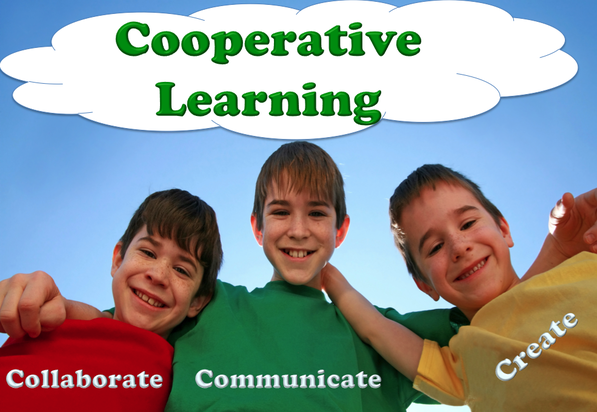
Cooperative Learning Strategies

For this Weekly writing, I read the article Using Cooperative Learning in Formal and Non-Formal Education by Katy Groseta and Brian Meyers. In the article, several different strategies to improve and manage cooperative learning were discussed. Some of these strategies include: limiting groups to a maximum of four students, only intervening when the groups absolutely need it, and making sure the groups have students of all skill and knowledge levels. When students get the chance to work without a teacher telling them what to do and in groups of other students with different levels of knowledge experience, students will flourish.

After reading this article, I decided to do a little bit more digging. I found this website which gives several different examples of Cooperative learning activities for teachers to use.

How will I use this?

While I am student teaching, I plan to use several different cooperative learning activities. One example of this is in my Small Gas Engines class, the students will have the opportunity to work together to prepare and present a skit or demonstration of the proper personal protective equipment (PPE) while working on an engine. I believe this will give the students the opportunity to really understand why we require the PPE that we do in a shop setting.


In Conclusion

Cooperative learning can be a powerful tool when it is used properly. We as educators need to be sure we are always giving the students the experience they need to improve upon themselves. Once the students graduate and leave the schools, They will need to be able to efficiently work with other people in all types of settings; cooperative learning activities give the students the chance to build the skills required to do these tasks.

Thursday, September 17, 2015

First Day of school

Today we did a mock first day of school in 412 lab. I had a lesson prepared to help the students learn each others names and for me to learn theirs, and also we went over the expectations, procedures, and consequences for the classroom.

After reviewing the video of my lesson I have identified two major areas I need to improve in. The first area is my enthusiasm. The second area is my preparation for class overall.

First I need to improve on my enthusiasm in the classroom. Whenever I taught this lesson, I had a tendency to be very quiet and at some points monotone, This is something that I really need to improve looking into the future. I believe I can improve this by finding better ways to engage the students, and also including music something else that is fun into the class.

The second area I believe I need to improve on is my preparation overall. I knew what I wanted to teach and exactly how I wanted to do it, but when the lesson came, it didn't go quite like I expected it to. I know I can improve this by planning out what I want to do and what to say so that I don't forget at the last minute.

Overall I thought that the class went well, I definitely need to improve my enthusiasm and my planning, but I believe that this is something that I should be able to work on over my next few lessons.

Sunday, September 13, 2015

Learning Objectives

This week, we read about all kinds of different interest approaches or "Hooks" (depending on what your reading) and writing objectives. I'm going to focus on the objectives today. I tend to have trouble writing objectives because at this point, and I believe it is because I don't always know what verbs to use to express how what I want to students to do.

After doing a little bit of digging though, I have found this helpful chart that shows the different levels of Blooms Taxonomy, and the different words you can use to signal each level.


To the left, you can see an example of each of the levels of Blooms Taxonomy and a quick description of the level. I believe we should always be pushing our students to try and achieve a higher level of thinking and learning. 


When it comes to student teaching the the Spring, I plan to use this and several of the hooks we have been learning about. I want to build my lessons so that I am pushing the students to think at higher levels as the semester goes on. I also want to students to have fun in the classes I will be teaching which is why I will be using some of the E-Moments we practiced and learned in class (The Little Professor and The Meteorologist were my two favorites). 

Sunday, August 30, 2015

Weekly Writing #1

I started reading this week with the Effective Teaching: Notes for the Beginning Teacher article. I found that this article explained mainly about how to keep students engage and ensure their success. One area in this article that really make me start thinking about my teaching in a class room was variability, the second most important area for student success. I have never really looked into different ways to teach subjects, but now going into my student teaching it seems like the only thing I want to look at. I have found a link to help all student teachers. The article from UNC Charlotte basically lists 150 different ways to help teach materials in a classroom to promote variability.

These articles have made a huge impact on my idea of teaching. I want to become the teacher that the students look to for success. I want them to come to me down the road and tell me " Your class is the reason I stayed in school" or "I may not have needed your class at the time but I still use what you taught". This is the kind of impact I want to make on students.

After reading all of these articles, I have decided that right at this moment, I am not ready to walk into a classroom as a teacher. I could walk in and teach lessons but I believe that I would be cheating the students out of an education at this point if I was the main teacher . There is still so much I need to learn and so many ideas I need to develop this semester before I think I will be ready.

Wednesday, August 26, 2015

First day of 412 Lab!

So today we had our first ever 412 lab. In this lab we teach short lessons and develop our techniques further. We were given lessons to teach and had two days to prepare them. My lesson was to teach the 7 Central American countries and the countries motto's. While I was teaching the lesson it seemed like my 15 minutes flew by and I didn't get to cover everything I wanted to. But overall I believe the lesson came across effectively, but would have been better with a little bit more time.

After re-watching the recording of during the lesson I have come to the conclusion that the information and methods I used were effective, but I do still have work to do in my disposition. As I watched the video I noticed that I would start leaning on the podium. I feel like that is something I should try to avoid. Another thing I noticed was that I would keep letting the class get a little bit too hectic and everyone was trying to talk at once. I believe I need to work on giving clearer instructions to the students, when I want just one to answer at a time I need to tell them that. Finally as I was watching the video I noticed that when the students would give answers I would acknowledge it but I did not give any feedback to the students, I would just continue to the next person.
Late again!

Last week I visited the Perry County Fair and I got to see all the goats that were entered by West Perry FFA members.

As you can see, the FFA members from West Perry and Greenwood had their animals labels  with FFA Posters. This helped me identify their projects before I even got the official tour. along with the goats, I also got to see the rabbits (not pictured).

After I did the visits, I was helping with the Stockman's competition at the fair. This is similar to a CDE if you have never been to one (like me). The kids that are signed up go from table to table doing everything from identifying seeds and animal breeds to grading hay.

After that part of the competition is done the students will then judge several different animals, goats, sheep, swine, and steers. 

overall, I had a great day at the fair and I believe I learned a lot from the competition. I never knew how to judge different animals before!


Sunday, August 9, 2015

My First SAE Visit

It has been awhile since I've posted on here so I am going to try something a little bit different. I am going to talk about my First SAE visit with Mrs. Miller at West Perry. 

What I saw:

I was at several different SAE's working with students of different levels. Some had done very little and some we were just checking up on. But most of them involved rabbits or growing plants. Both areas that I have very little experience in.

What I learned:

While we were out. I saw and learned so much. First I was helping to tattoo a rabbits ear  and sex the rabbit to prepare for the Perry County Fair. This girl had done very little with The AET so we spent the majority of our time teaching her how to use it and how to update it. 

The other SAE visit that I really learned from was a girl who had planted an acre of soybeans. She knew a lot more about The AET so we didn't spend much time on that. Instead we spent time teaching her how to calculate the density of her soybeans. This was something totally new to me and I feel like I will really be able to use this experience.

How will I use this?

While I am at West Perry, I will be teaching a small animal science class, The rabbit knowledge I have been gaining will be information that I bring into the classroom. I may even be able to teach the students how to tattoo a rabbit during the class.

Overall this was an extremely rewarding and informative experience for me. I am looking forward to me next visit at the Perry County Fair!